


3 Tips for Relief Vet Success

Thinking about being a relief vet, but not sure where to start?
Dr. Melanie Shapiro previously worked as an Associate Veterinarian and an Emergency Veterinarian before moving to full-time relief. Here, explains why she chose to do relief through IndeVets, and offers 3 tips for doctors who are new to relief.
Why I joined IndeVets
I was drawn to relief work because I love the idea of curating my own schedule, seeing how different clinics operate, and helping other veterinarians who may have a lot on their plate. There is something uniquely rewarding about practicing excellent medicine while taking on caseloads for other veterinarians who may be overwhelmed, or need extra support.
Doing relief on your own however can be intimidating. As a relief doctor, you’re responsible for finding your own clients, and managing your own advertising, invoicing, accounting, and insurance. That’s all after you work the shifts!
Those jobs are why I ended up joining IndeVets, where they take on all that “stuff” for me (more on that later).
That’s not to say being an IndeVet doesn’t come with challenges. These include adapting to new software, working efficiently, and seeing predominantly illness cases — and many times, you are starting from scratch because you have not seen the pet before (although IndeVets offers opportunities for recurring shifts and follow-ups!)
So here are some tips for new IndeVets — and all relief vets.
Learn more about joining our team.
Tip 1: Take initiative at each practice
It is important to make your presence known when you start providing your services to a new clinic. Take the time to introduce yourself to all staff members. Make sure to tell them that you have not been to this practice before and would like to be given a tour.
In addition, always ask how you can make yourself helpful. If you are working with another veterinarian, and they are running behind, offer to take an extra appointment if you can. Perhaps they have ten call backs, and you can take two easy ones. Cliche as it sounds, we all need to help each other in this field, especially now when demand for veterinary care is very high.
Tip 2: Start every shift as if it is your first day at a new job, even if you’ve been there before!
I am a big fan of showing up early to my first shift to make sure I am comfortable and well-acquainted with the software and the facilities. Being punctual is important as a relief vet, and it is incidentally also part of IndeVets’ “no jerk” policy!
In addition, since you are a new face to most clients, it is important to dress professionally, and come in with a good attitude — just like you would as a new associate! I begin every shift with confidence, ambition, and gratitude.
Want more clinical & industry news from IndeVets? Sign up here.
Tip 3: Plan work around your life, not the other way around (yes, really)
Veterinarians are so much more than who they are at work. They are also friends, parents, siblings, spouses, athletes, foodies, goofballs, and the list goes on and on.
When we lose sight of the people and activities that make our lives whole, and instead define ourselves by who we are at work, we become burnt out, disgruntled, and mentally exhausted. The beauty of relief is that with careful planning and scheduling, you never have to miss an important life event.
Planning ahead is what makes it possible to build work around life, not the other way around. I think through the days I want to work each week, protect the time that matters personally, and use that as the foundation for everything else. With IndeVets, that upfront thinking pays off — once you set your working days, your Scheduling Coordinator builds your schedule around them months in advance, so you have real visibility into what’s coming.
At IndeVets, doctors choose how many days per week they want to work — anywhere from one to five — and their schedule and salary are built around that choice. A dedicated Scheduling Coordinator is there to make sure your working days translate into a schedule that works for your life.
Read more: The Five F’s of the perfect job in vet med
Concluding thoughts
I love this way of practicing, but I can also recognize it’s not for everyone. What makes IndeVets different is that you get the autonomy of relief without having to manage all the “stuff” that comes with it — finding hospitals, handling paperwork, chasing payments. IndeVets has partnerships with thousands of animal hospitals across the country, and as a W-2 employee, I get a guaranteed salary paid every two weeks, full benefits, and a team behind me. The independence, without the uncertainty.
I’m working as a relief veterinarian through this fabulous community, but I also have a group of smart, nice doctors for collaboration, and a full benefits package. It really is the best of both worlds!
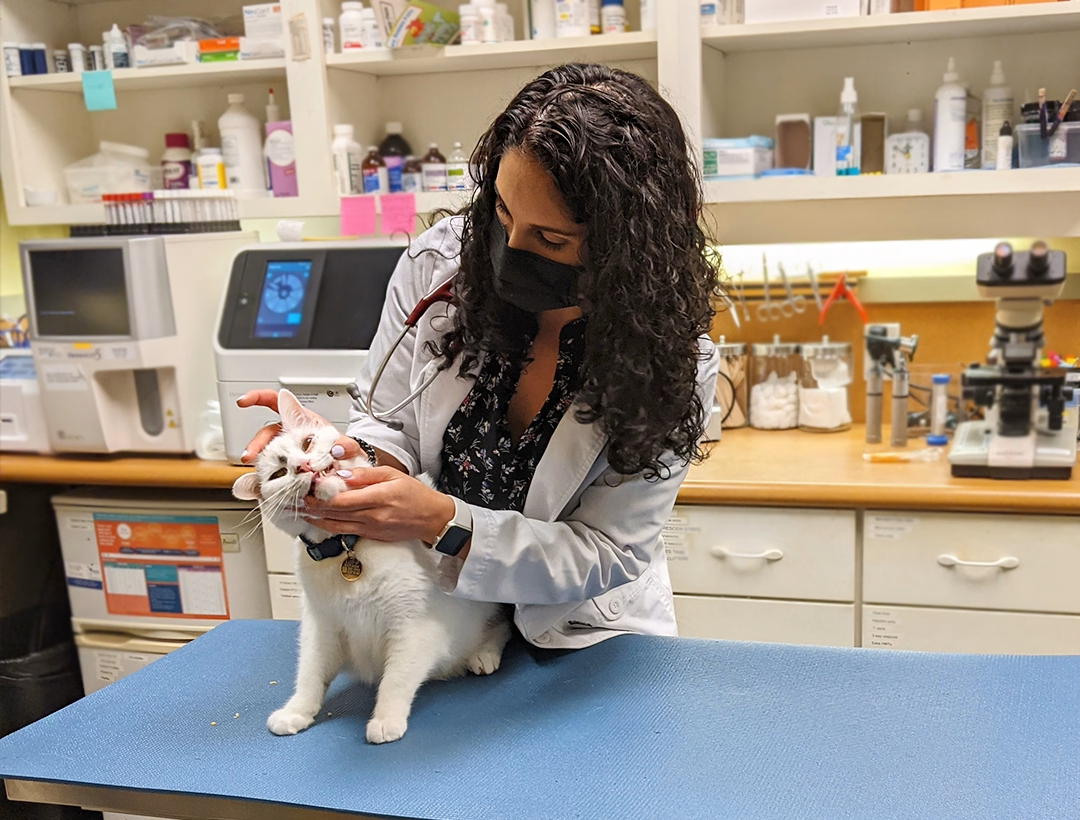
Dr. Melanie Shapiro is a Lead Associate IndeVet practicing in New York City. She’s pictured here examining Panda.
More from IndeVets:
8 perception shifts to become a happier vet
One Health, Covid, and vet med: How the pandemic highlights veterinarians’ role in public health